Here's the trap I see over and over: someone picks the most famous home battery on the market, gets it installed, and then finds out it qualifies for $0 in rebates. Meanwhile their neighbour with a less-hyped model just got thousands back. Same install quality, same performance—totally different rebate, because of one list.
One rule, everything else flows from it
BC Hydro only pays rebates on batteries from its approved battery list. That's it. A battery can be the best in the world and still earn you nothing if it's not on that list.
⚠️ The Tesla Powerwall problem
The Powerwall is the most recognised home battery in the world — and in BC, all Tesla batteries have been ineligible since March 12, 2025, so a Powerwall earns $0 from BC Hydro. People install one assuming a rebate is coming, and it never does. The full story →
How much the rebate is worth (2026)
| Your situation | Battery rebate |
|---|---|
| Battery not on the approved list | $0 |
| Approved battery, paired with solar | up to $1,500 |
| Approved battery, enrolled in Peak Saver | up to $5,000 |
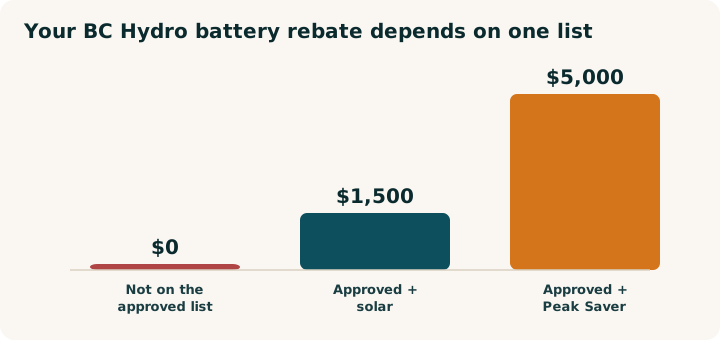
Peak Saver is the program where you let BC Hydro draw a little power from your battery during winter peak-demand events. You stay in control, you can opt out of events, and you earn seasonal rewards — and critically, enrolling is what unlocks the full rebate. Enrolling a home battery pays a $500 bonus plus $250 each winter season. How to enroll your devices →
What to actually look for in an approved battery
- On the approved list — non-negotiable, or the rebate is zero.
- LFP chemistry — lithium iron phosphate runs cooler, is more tolerant, and generally lasts more cycles than the NMC/NCA cells in some older batteries. Good for something bolted to your house for a decade.
- AC-coupled if you already have solar — it adds on without replacing your inverter. (DC-coupled is slightly more efficient but harder to retrofit.)
- Warranty you understand — the term, the capacity-retention promise, and who services it over 10–15 years. Ask this about every brand.
- Sized to your goal — backing up essentials in an outage needs far less battery (and money) than running your whole home.
A BC example: the Eguana Evolve
The Calgary-made Eguana Evolve (LFP and LFP Max) is on BC Hydro's approved list, uses LFP chemistry, is AC-coupled, and BC Hydro even runs a dedicated Eguana Peak Saver enrollment page — so it ticks the boxes above. We break it down on our Eguana Evolve explainer. It's not the only good approved option, but it's a clear BC-fit example.
One honest caveat about batteries in general
On bill savings alone, a battery usually doesn't pay for itself in BC yet — arbitrage math doesn't get there. The real case is resilience (backup during outages) plus the rebate and Peak Saver rewards that offset a big chunk of the cost. If you mostly care about return on investment, do insulation and a heat pump first — then add solar and a battery for resilience.
See your battery + solar rebate
Free, no spam — your exact numbers for your city and income in under a minute.
Estimate my rebates →Batteries are also the fastest-improving piece of a home energy system right now — see how fast battery costs are actually falling and whether it's worth waiting for the next generation.
Sources: BC Hydro approved battery list and solar & battery rebates. Approved-product lists and amounts change — confirm the current list with your installer before buying.